

 Business License

Europe's Top Pick-and-Place Machines: A Production Manager's Guide to Flexible SMT Lines in 2024
Stepping onto the factory floor in Prague, where the air hums with the whir of conveyors and the faint ozone tang of fresh solder, I often pause to appreciate the pick-and-place machine at the heart of it all. As production manager for a 150-person electronics firm focused on automotive and IoT, I've overseen enough line overhauls to spot what sticks in Europe's competitive landscape. It's not the machines that scream loudest, but those that quietly adapt – handling a morning run of car infotainment boards and an afternoon pivot to smart thermostats without batting an eye. With the continent's SMT market valued at $700 million in 2024 and eyeing $1.1 billion by 2030 at a 7.5% clip, per The Business Research Company, the focus is squarely on flexibility amid EV and 5G demands.
Our wake-up call came two years back: a surge in custom orders exposed our legacy setup's limits. Feeder changes dragged on for 90 minutes, scrap rates hovered at 12% from misaligned tiny components, and we were bleeding hours to manual tweaks. Enter the 2024 frontrunners, vetted through supplier demos and cross-border forums. Yamaha's YSM40R leads with 100,000 CPH, its feeder array swapping in under 10 minutes for high-volume blasts. We ran a pilot on a 1,000-unit sensor batch; the consistent ±25μm accuracy meant zero placement fails, and cycle times shaved 22%.
ASM's SIPLACE TX, a German staple at 78,000 CPH, brings AI vision that deciphers warped boards mid-run – crucial for automotive precision where tolerances are razor-thin. A colleague in Munich shared their tale: integrating it with AOI scanners caught 40% more defects early, turning potential recalls into routine wins. Fuji's NXT III counters with 96,000 CPH versatility, its design accommodating odd-forms like connectors without custom fixturing. In our shop, it handled a mixed IoT prototype sprint, boosting yield by 18% and easing the load on our three-shift crew.
Mid-market picks like JUKI's RX-7R offer 75,000 CPH modularity without the premium price tag, perfect for Eastern Europe's scaling acts. Panasonic's NPM-DX adds force-sensing finesse for fragile medical parts, reducing stress-induced cracks in our test cycles. Hanwha's Decan S2 at 40,000 CPH keeps auto lines economical, while Mycronic's MY300 with 200 feeders suits low-volume niches. Europlacer's iineo+ rounds out at 50,000 CPH, a UK favorite for consumer agility.
I.C.T's involvement? They're the thread pulling it together. Rather than isolated gear, they deliver turnkey SMT equipment lines – printers, conveyors, reflows – tuned to your throughput. For our JUKI upgrade, their Prague-based team conducted a four-hour calibration session, embedding custom software for predictive alerts. Post-go-live, downtime fell 35%, and a follow-up survey showed our operators rating the interface 4.7/5 for intuitiveness. One tech quipped, "It's like the machine anticipates the jam before I do." Their European warehouses ensure 48-hour spares delivery, a boon when a nozzle fails mid-week.
Costs align with reality: $250K-$500K upfront, but with 15-20% lower ops expenses from durable components, payback hits 18-24 months. For engineers, the win is in diagnostics that flag issues via app; for procurement, it's the bundled support slashing integration risks. As we layer in selective wave soldering for hybrid boards, these tools fortify our edge.
Europe's manufacturers aren't just building boards – we're architecting resilience. From my floor view, the right pick-and-place isn't about peaks; it's the steady climb.
Learn More about SMT Line: https://smtmachineline.com/which-pick-and-place-machines-are-best-selling-in-europe/

Contact Us
Recommended Products
-
 20w 50w for LED Lights / LED Bulb Laser Logo Printer / Mini Fiber Laser Marking MachineUS$ 4500 - 65000MOQ: 1 Set
 -
ETA High Accuracy 20W Light Laser Marking Printing Machine for Bulbs With Good PriceUS$ 4500 - 65000MOQ: 1 Set
-
ETA High Level 20w Fiber Laser Label Marking Machine for LED Lights / MetalUS$ 4500 - 65000MOQ: 1 Set
-
ETA Laser Printer Bulb 20w Laser Marking Machine Barcode Logo Printer With High EfficiencyUS$ 4500 - 65000MOQ: 1 Set
-
ETA Fiber LED Laser Marker Machine Printer For LED BulbsUS$ 4500 - 65000MOQ: 1 Set
-
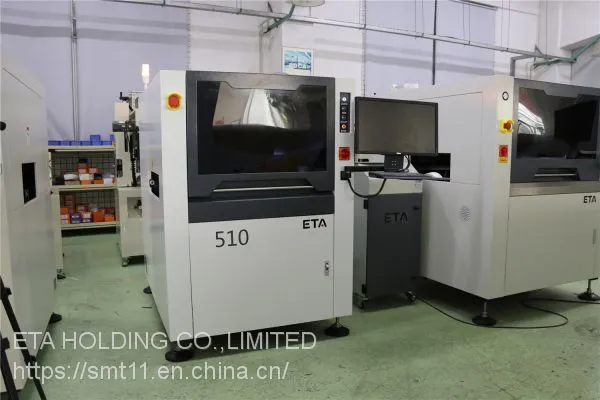
High Accuracy Automatic SMT Machine PCB Laser Printer Machine for LED LineUS$ 4500 - 65000MOQ: 1 Set
-
SMT LED PCB Laser Printer Machine PCB Borad Laser Marking Machine for PCBUS$ 4500 - 65000MOQ: 1 Set
-
ETA SMT Automatic Laser Printer Barcode With Cost EffectiveUS$ 4500 - 65000MOQ: 1 Set
-
2020 New SMT PCB Laser Printing Machine for SMTUS$ 4500 - 65000MOQ: 1 Set
-
2020 New SMT PCB Laser Printing Machine for SMTUS$ 4500 - 65000MOQ: 1 Set
-
ETA Manufacture Supply SMT Production Line PCBA Cleaning Machine / Solder Paste Washing MachinesUS$ 10000 - 25000MOQ: 1 Set
-
ETA High Level PCB Fixture Board Cleaner for PCBA Fixture KitUS$ 10000 - 25000MOQ: 1 Set
-
ETA Pneumatic Silk Screen Cleaner PCBA Cleaning Machine Washing Machine PCB Board Universal for Washing PCBAUS$ 10000 - 25000MOQ: 1 Set
-
ETA High Precision Offline PCBA Cleaning Machine for Clean PCB Board Organic and Inorganic ContaminationsUS$ 10000 - 25000MOQ: 1 Set
-
ETA Off-line Automatic DI Water Spraying PCBA Cleaning Machine for Water-Soluble FluxUS$ 10000 - 25000MOQ: 1 Set
-
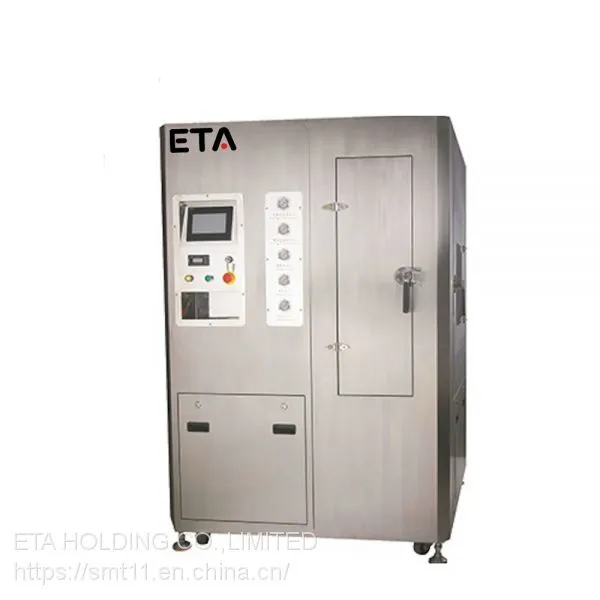
ETA Automatic Electronic PCBA Cleaner and SMT Drying Machine for Solder Paste on PCBAUS$ 10000 - 25000MOQ: 1 Set
-
ETA 5600 PCBA Washing Machine Industrial PCB Cleaning Machine Manufacturer/Nozzle/StencilUS$ 10000 - 25000MOQ: 1 Set
-
ETA Automatic Electronic Industry Off-line PCBA SMT Cleaning Machine Clean Solder Paste on PCBAUS$ 10000 - 25000MOQ: 1 Set
-
ETA Automatic PCBA Industry PCBA Cleaning Machine Manufacturer With DI WaterUS$ 10000 - 25000MOQ: 1 Set
-
ETA SMT Cleaning Machine PCBA Flux Cleaning Equipment With Batch Cleaning Process for Solder Paste or Non-clean FluxUS$ 10000 - 25000MOQ: 1 Set
